Brisbane's storm season runs from roughly October to April, and the time to prepare is before the first severe thunderstorm warning, not during it. Get Ready Queensland recommends every household have a written plan, an emergency kit with enough supplies for at least three days at home, and a way to receive official warnings. Add some basic property maintenance and a plan for pets and vehicles, and you have covered most of what matters.
This checklist is a preparation guide, not a live warning. During severe weather, follow the Bureau of Meteorology and your local disaster dashboard for current advice. Information was checked against Get Ready Queensland's published guidance on 1 October 2026.
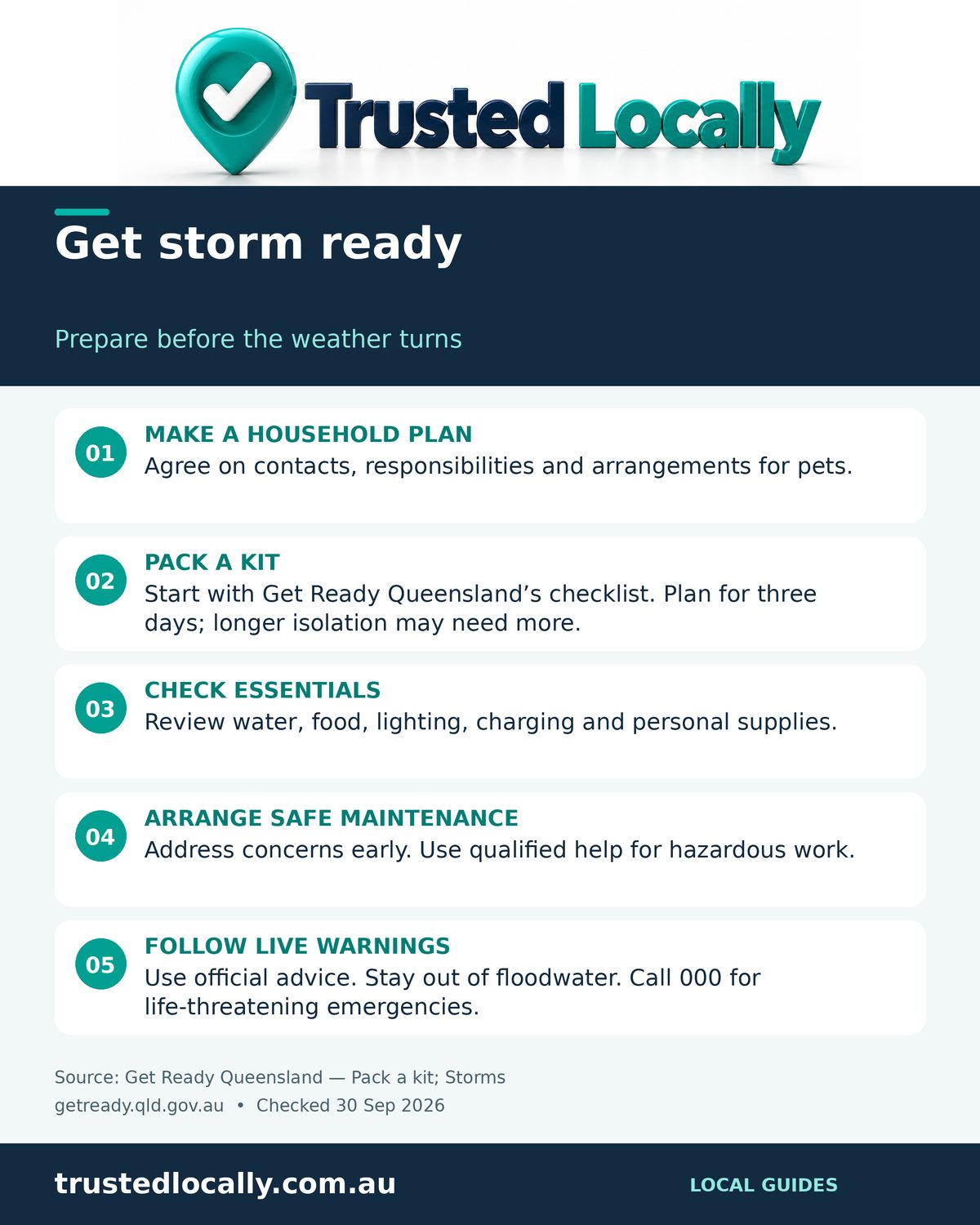
1. Write a household plan that fits your home
Start with the people and animals who depend on the plan: children, older relatives, housemates, regular visitors, pets, and anyone who relies on medication, refrigerated supplies or powered equipment. Then decide:
- How you will contact each other if someone is away from home when a storm hits.
- Who outside the household is your check-in contact.
- Where the kit, torches, first aid supplies and important documents are kept.
- Where you would shelter inside the house (an internal room away from windows).
- What you would do if power was out for a day or more.
Write it down and keep a paper copy somewhere obvious. A plan stored only on one person's phone is hard to use when that phone is flat or that person is out. Get Ready Queensland has a free plan template on its website.
2. Build an emergency kit you can actually use
The Get Ready Queensland emergency kit checklist is the best starting point. It is built around what a household needs to stay at home for three days, with extra supplies if longer isolation is possible. The core items:
Essentials
- Drinking water: at least 10 litres per person, plus water for pets.
- Non-perishable food for three days and a manual can opener.
- Torch and spare batteries, or a wind-up torch. Avoid candles.
- Battery or wind-up radio for warnings if the power and internet drop out.
- Portable power bank, charged, plus charging cables.
- First aid kit and any prescription medication for at least a week.
Documents and personal items
- Copies of ID, insurance policies and important contacts in a waterproof bag or saved securely online.
- Cash in small notes in case card payments are down.
- Toiletries, nappies, formula and any specialist supplies.
- Spare clothes, a blanket and sturdy shoes.
Pets
- Food and water for three days, medication, lead or carrier, and a photo in case you are separated.
Check expiry dates and test devices at the start of each season. Keep everything in one container that everyone can find. A collection of useful items spread across five cupboards is not a kit.
3. Sort property maintenance while the weather is fine
Walk around your property on a calm day and list anything that needs attention. Common storm-season jobs in Brisbane:
- Clear gutters and downpipes so heavy rain drains instead of overflowing into eaves.
- Trim branches overhanging the roof or near powerlines. Work near powerlines must be done by a qualified contractor, never a DIY job.
- Secure or store loose items: trampolines, outdoor furniture, garden tools, bins.
- Check roof fixings, flashing and any loose sheeting from the ground. Do not climb on the roof.
- Test that windows and doors close properly and that shutters or blinds work.
- Know where the electricity switchboard and water mains are and how to turn them off.
Use a licensed tradesperson for anything structural or electrical. If you rent, report maintenance issues to the property manager in writing and keep a copy of the request. For non-urgent work, Trusted Locally lists roofing contractors, electricians, gardeners and plumbers across Brisbane, and our guide to choosing a tradie in Brisbane explains how to check a licence before you book.
4. Include vehicles and pets in the plan
Hail is one of the most expensive storm outcomes in Brisbane. Decide in advance where cars can be parked under cover, whether that is your garage, a neighbour's carport or a shopping centre car park, and act when a warning is issued rather than when the hail starts. Keep the fuel tank at least half full during the season in case of a power outage at service stations.
For pets, keep leads and carriers accessible, bring animals inside when a warning is issued and make sure microchip details are current. If your household has more than one adult, assign tasks so nobody assumes someone else has brought the dog in or moved the car.
Explain the plan to children calmly and in age-appropriate language. They can help find torches or pack their own small bag without being given responsibility for safety decisions.
5. Know where official warnings come from
Rely on official channels, not social media screenshots or dramatic weather videos from last year:
- The Bureau of Meteorology website and app for warnings and the radar.
- The Brisbane City Council disaster dashboard for local road closures, power outages and sandbag locations.
- Get Ready Queensland's storm guidance for what to do during the event.
- Energex for power outage updates.
- Emergency Alert text messages from authorities.
Call 000 for a life-threatening emergency and 132 500 for SES help with storm damage such as a leaking roof or fallen tree. Stay away from floodwater, fallen powerlines and damaged electrical equipment. Preparation should remove the need to go outside during dangerous conditions to protect possessions.
6. Check your insurance before you need it
Read your home, contents and car policies before the season starts. Check what is covered for storm, hail, flood and storm surge, since insurers define these differently, and note the excess. Take dated photos of each room and valuable items so a claim is easier to document. If you live in a flood-prone area, our guide on checking flood risk for a Brisbane property explains how to find Council's flood information for your address.
7. Review the plan every season
Pick a trigger that suits your household: the start of October, daylight saving in other states, or a fixed date in your calendar. At that point, check contact details, replace expired food and batteries, review pet and medication needs and update the plan for anyone who has moved in or out. Fifteen minutes once a year keeps the kit useful.
Official warnings and emergency services remain your sources for urgent decisions. Trusted Locally is for the calm-weather jobs: finding a licensed local tradesperson for the maintenance that keeps your home ready.
Frequently asked questions
When is storm season in Brisbane?
Brisbane's severe storm season generally runs from October to April, with the highest risk of severe thunderstorms, hail and heavy rain from November to March. Preparation is best done in September or early October before the season starts.
What should be in a storm emergency kit in Queensland?
Get Ready Queensland recommends enough for three days at home: at least 10 litres of water per person, non-perishable food, torch and batteries, a battery radio, a charged power bank, first aid kit, medication, copies of documents, cash, toiletries and pet supplies.
Who do I call for storm damage in Brisbane?
Call 000 for a life-threatening emergency. For SES help with storm damage such as a leaking roof, fallen tree or sandbagging, call 132 500. Report power outages and fallen powerlines to Energex.
How do I prepare my house for a storm in Brisbane?
Clear gutters, trim overhanging branches, secure loose outdoor items, check roof fixings from the ground, know how to turn off power and water, park vehicles under cover when a warning is issued and have a written household plan and emergency kit.
Where do I get official storm warnings for Brisbane?
Use the Bureau of Meteorology website or app, the Brisbane City Council disaster dashboard, Get Ready Queensland, Energex outage updates and Emergency Alert text messages. Do not rely on social media posts or old weather images.